
A note from the author:
I grew up in western Washington and admittedly never thought about wildfire as something that impacted me until my senior year of high school, when smoke infiltrated Seattle, mainly from British Columbia. It’s an all too common sentiment for west-siders to think of fire as something that happens “over there” – whether it be Canada, California, or across the Cascades. Our wet, temperate region feels untouchable. My message to my fellow western Washingtonians is that we are not immune to the impacts of wildfire and we will not be spared from their increasing frequency and impact on what we care about. Wildfire does and will continue to have a presence in western Washington and we need to start acting like it.
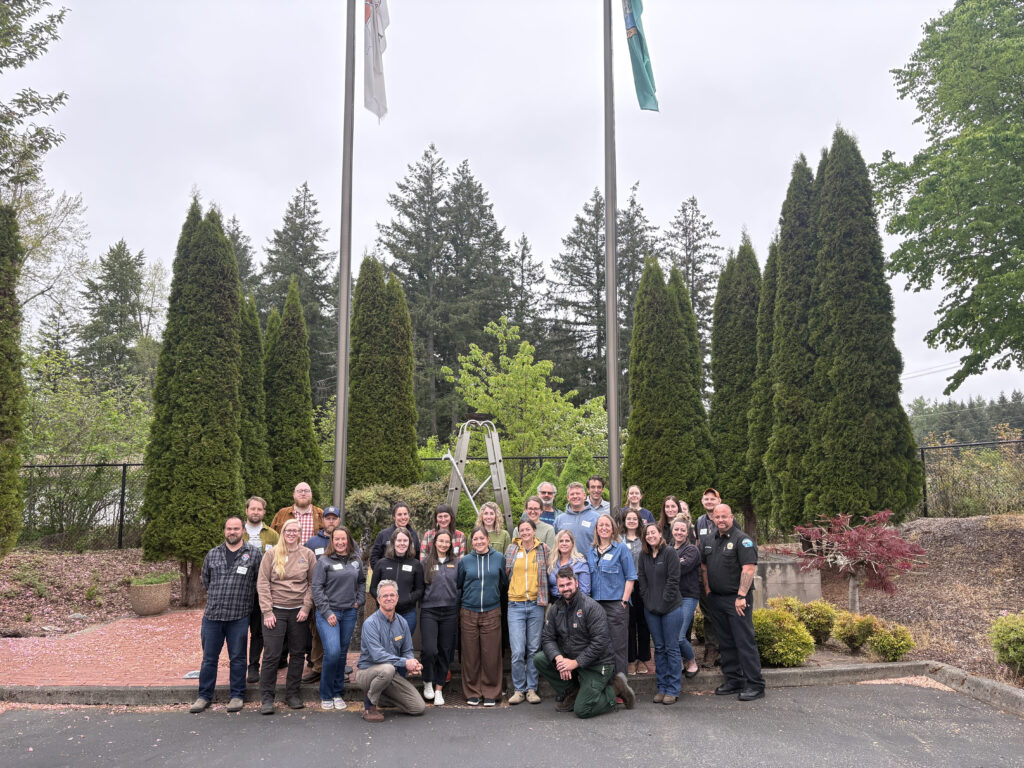
That being said, there are some folks leading the way in expanding the west-side’s knowledge of and preparedness for fire. In May of 2026, Washington Resource Conservation and Development (WRCD) and WAFAC hosted a Western Washington Wildfire gathering to both discuss the challenges of fire on the west-side and begin working together to find solutions. Attendees represented Conservation Districts, Fire Districts, Tribal Nations, non-profits, universities, and state and federal agencies – some have been working in wildfire for decades and others are just beginning to interface with it. Regardless of experience, the overwhelming consensus amongst all in attendance was that it’s well past time for western Washington to begin urgently addressing wildfire as a serious risk to what we value in our communities and landscapes.
A sign of changing times
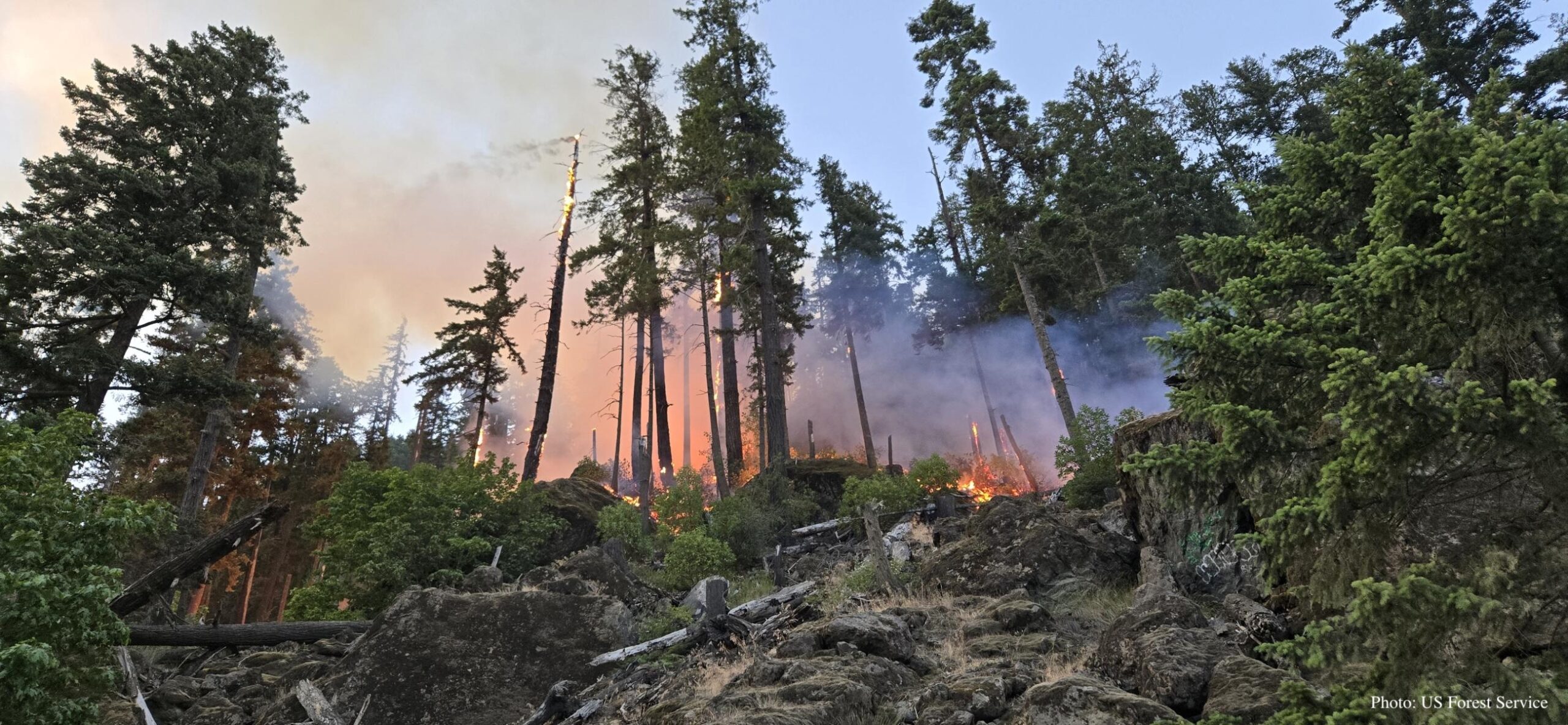
In July 2025, the Bear Gulch Fire started along Lake Cushman in Olympic National Forest. Finally 100% contained after 129 days it grew to over 20,000 acres, making it the largest fire on the Olympic Peninsula since the Great Forks Fire of 1951. Thankfully, no lives or major structures were lost, however its impact was far-reaching in terms of what it symbolized for western Washington.
Wildfire is not foreign to the west-side, however it is somewhat foreign to our current cultural memory. Historical evidence indicates that west-side forests have experienced fire in various frequencies and severities over time. In moist, coastal forests, rare but very large, high-severity and intensity fire events likely occurred in 200 to 600 year intervals, often associated with prolonged drought conditions and strong east-wind events (Agee 1993; Reilly et al. 2022).
In some western Cascades Douglas-fir / western hemlock forests, similar long-interval, high-severity fire dynamics occurred, but research also shows more mixed-severity fire and spatial variability than previously assumed. Recent studies indicate that this variability reflected interactions among topography, microclimate, fuels, drought, and historical Indigenous fire stewardship (Tepley et al. 2013; Johnston et al. 2023; Merschel et al. 2024). Evidence from the northeast Olympic Peninsula, San Juan/Puget lowlands, and some drier, low-elevation areas indicates more frequent, mixed-severity fire with greater influence from Indigenous burning (Baker et al. 2019)
West-side forests have historical fire regimes, including rare large fires, but modern climate, ignition, and exposure patterns may be shifting these systems toward a future range of variability that creates greater risk.
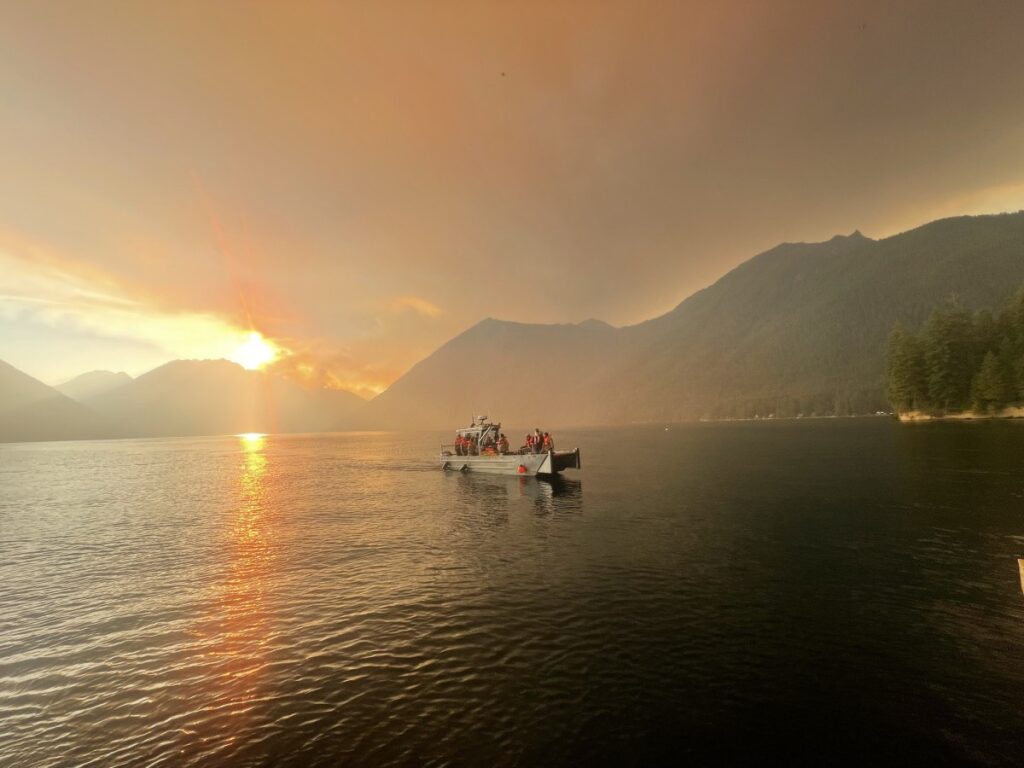
A fire the magnitude of Bear Gulch is a stark reminder that large, wildland fires may not be considered an anomaly for our current times. Modern climate, ignition, and exposure patterns are shifting historical fire regimes toward a future of greater fire frequency and risk for people and what they value.
Western Washington will continue to be confronted by “new normals”. Experts from the National Weather Service say it is safe to assume that every fire season will be an active one. This year, we entered summer with 25%-50% of the typical snow pack, above average temperatures, and large areas of extended drought. All signs pointed to an active season, indeed. As of July 2026, we’ve seen several starts west of the Cascades, including the Mount Tom Creek Fire, which is actively burning on the west side of Olympic National Park.
The Western WA Wildfire gathering represents merely one step in a long journey – there is much work to be done to better prepare western Washington communities and landscapes for future fire. However, there are plenty of people already leading by example and even more ready to join in. Below, we’ve compiled a few key takeaways along with several helpful resources shared at the meeting.
1. The dichotomy of east and west
While there are many lessons to be learned from our colleagues to the east of the Cascades, not everything can be directly replicated or reproduced. Our forests and fuels are different, our communities are different, even the factors that influence wildfire ignition and spread are different. Rather than being highly fuel dependent, west-side wildfires are more-so determined by weather patterns, like high-temperatures and east wind events, typically in conditions of drought. Two representatives from the National Weather Service Seattle Fire Program shared several resources that local safety agencies can look to for fire-related weather information:
- Fire Weather Alerting: the NWS produces fire weather watches and warnings along with messaging that can be used to communicate with the public
- Spot Forecast Monitor: detailed, site specific SPOT forecasts can be requested for wildland fires and Rx fires by agency personnel
Washington has such a stark dichotomy between Eastside and Westside when it comes to wildfire. I think on the Westside, we’re still trying to figure out what makes sense, and is the most effective in terms of mitigations. Structure hardening concepts are pretty much universally applicable, but fuels management approaches require some tailoring to the environments in which they occur.
Kirk Troberg, WA DNR Community Wildfire Resilience Coordinator
2. The complication of the urban
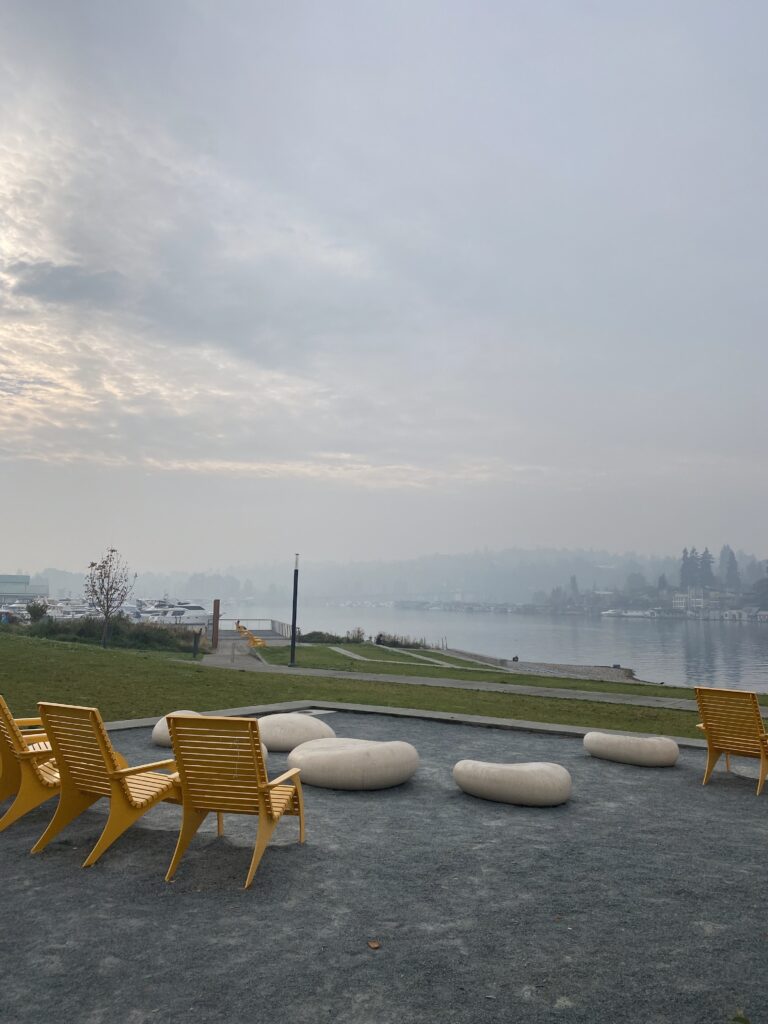
A majority of Washington’s population lives west of the Cascades, and the region is rapidly developing, especially in the WUI, meaning large fires place many lives and values at risk. Further, with large, dense populations already exposed to urban pollution and heat islands, the impact of smoke is a major public health concern. Annie Doubleday from the Washington Department of Health shared lots of great resources with attendees of the meeting for how communities can be “smoke ready”.
- Washington Smoke Blog: current smoke information and updates
for public health, air quality, and other officials to aid in decision-making during wildfire smoke response
- Smoke Ready Resources:
Being smoke ready means that communities and individuals have the knowledge and ability to stay reasonably safe and healthy during smoke episodes.
Interagency Wildland Fire Air Quality Response Program
3. The public perception of fire
Washington as a whole is not alone in its relative discomfort and unfamiliarity with fire. Since time immemorial, fire has been a vital part of the fabric of Washington’s ecosystems, both a natural phenomenon and a tool used by Indigenous peoples. 100 years of fire exclusion disconnected us from fire, resulting in a lack of collective knowledge of how to live alongside it. While we’ve made strides in heightening public awareness of wildfire risk, much is still needed to not only remind the population that fire poses a risk to west-side communities, but that there are actions we can, and must, take to mitigate against that risk if we’re going to adapt to a future that is certain to include fire.
Comprehending the reality of wildfire risk can be difficult in a place where fire feels far away. Importantly, risks are tied to values – one of the most effective ways to encourage people to take action is to help them identify how to protect the things they care about.
Ashley Blazina from the Department of Natural Resources presented attendees with myriad tools that can be used to analyze their communities’ risk, plan and prioritize actions, as well as communicate with the public.
Where there’s people, there’s fire.
95% of wildfires in western Washington are human-caused. We need to treat wildfire risk as more than symptomatic smoke and instead encourage communities to take ownership over mitigation in their place.
4. The role of Indigenous burning
Representatives from both the Tulalip Tribe and Snoqualmie Tribe attended our Western WA Wildfire meeting and participated in a Beneficial Fire panel. Both are investing in the reintroduction of Indigenous burning into their communities to support cultural and resource management goals. Uplifting these efforts is not only necessary to uphold reserved treaty rights, but goes further: “Including the elements of indigenous knowledge (traditional ecological knowledge, traditional fire knowledge, and traditional forest-related knowledge) can lead to a better understanding of the implications of frequency and/or seasonality for developing treatment prescriptions and discerning the effects of potential management strategies” (Lake, 2021). However, tribal representatives at the meeting aptly noted that there are many barriers to implementing Indigenous cultural burning – relatively inaccessible trainings, qualification requirements, and the professionalization of fire – that are misaligned with Indigenous burning practices.
More information and resources:
- Read about how this work is being accomplished across the mountains in northeast Washington, led by sʔulíp: Northeast Washington Indigenous Peoples Burning Network.
- Indigenous Cultural Fire: Myths & Facts from the Indigenous Leadership Initiative in Canada.
Wrapping Up
Several meeting participants noted their relative surprise to see representatives from so many different entities. If we break down silos and form connections across sectors, tackling the growing wildfire risk in western Washington will only become more manageable. WAFAC hopes to continue engaging with stakeholders and practitioners on the west-side to grow the fire adapted communities network west of the Cascades. Interested in joining us? Connect with us.
More on west-side wildfire: