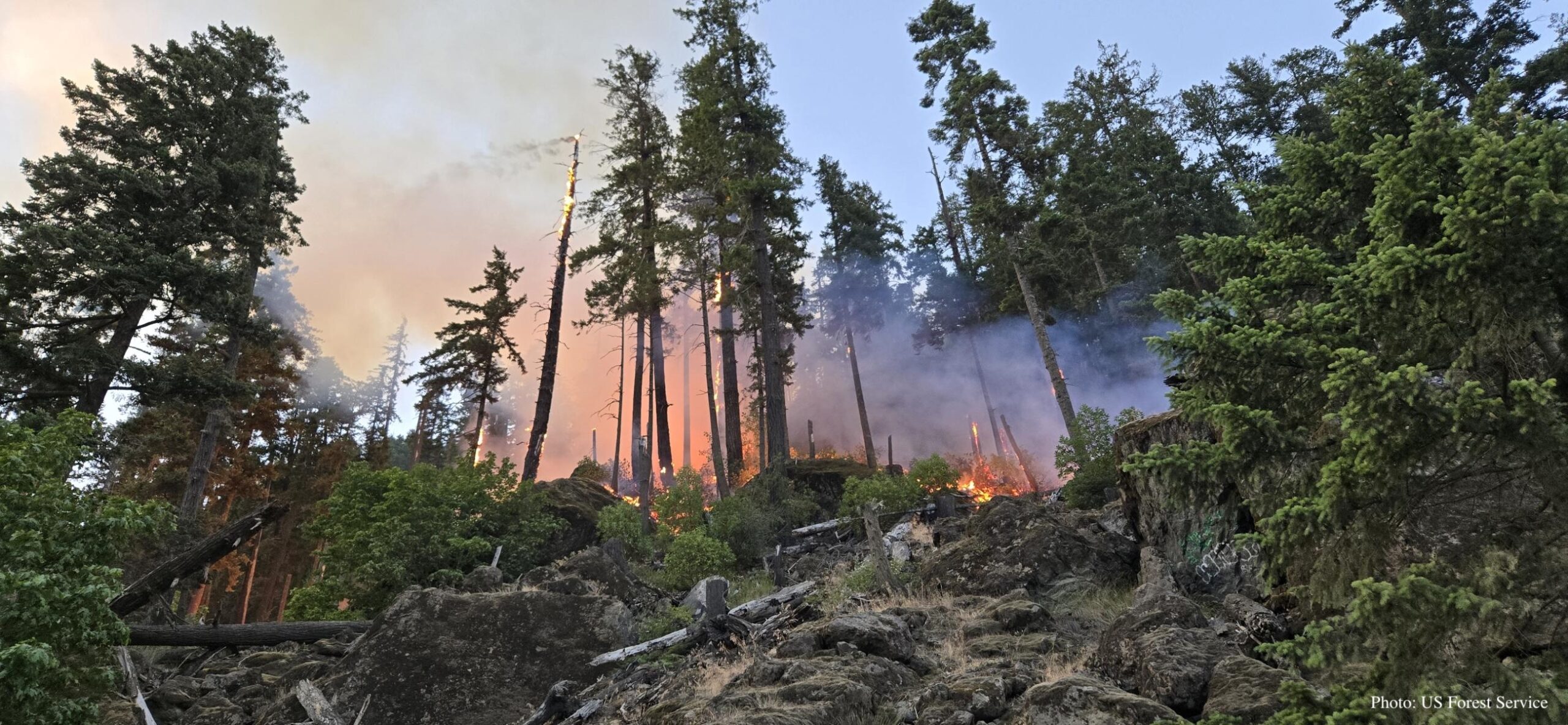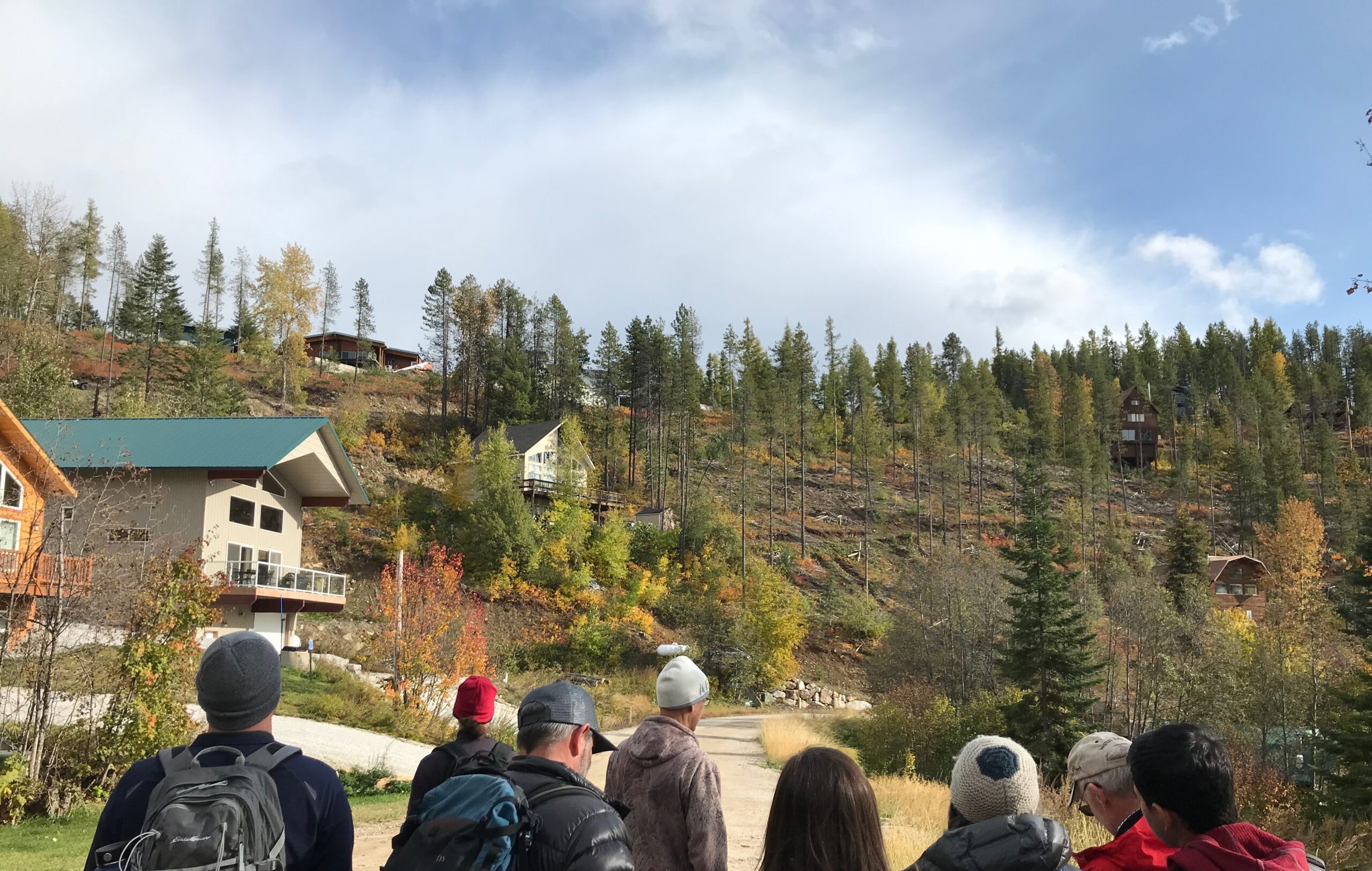

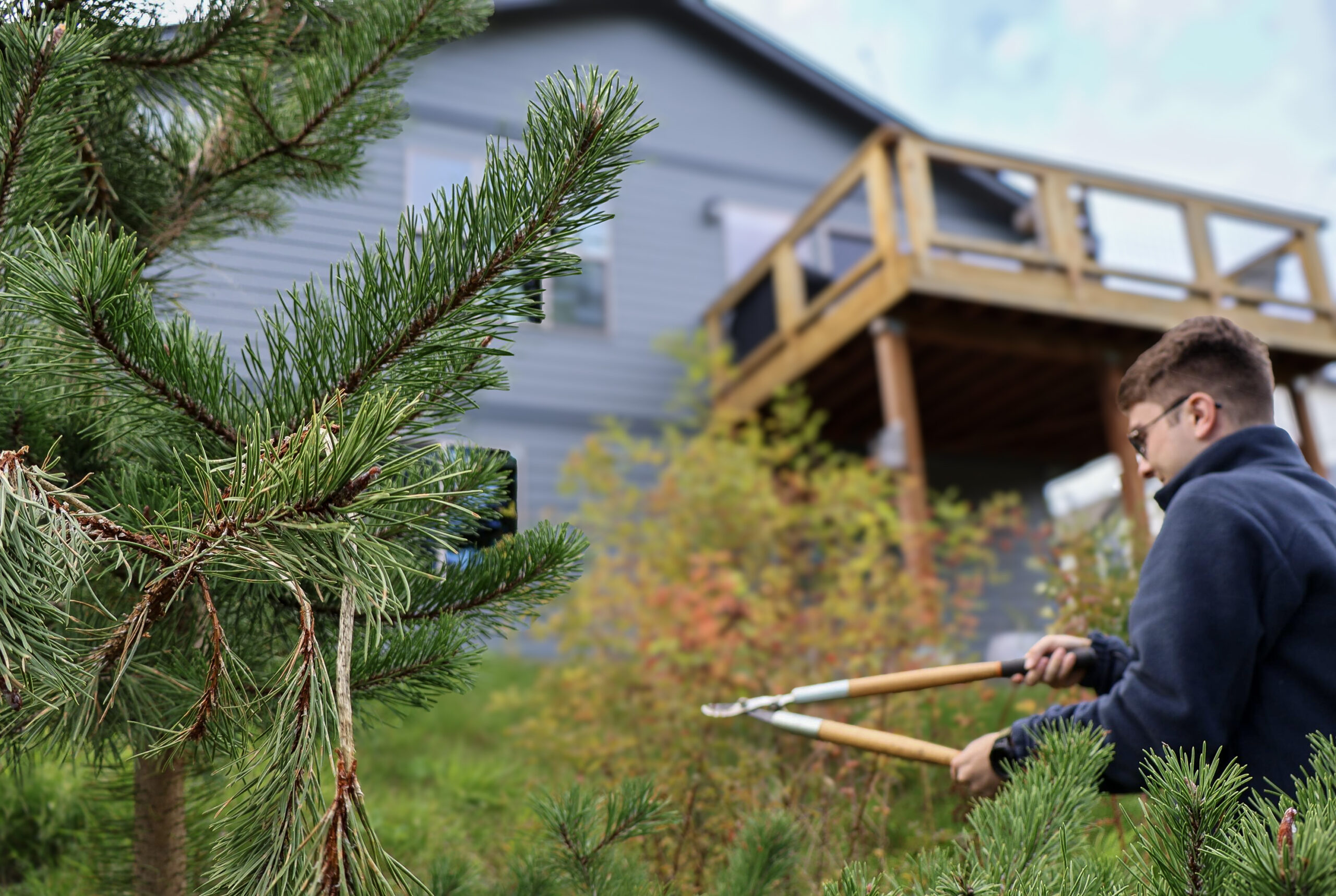
Note: This was written prior to the devastating wildfires that have impacted many communities in Washington this summer. It is the hope of our staff and partners that the Community Wildfire Ambassador approach serves to equip neighborhoods with the skills, tools, and confidence to build strong and resilient fire-adapted communities.
As Washington continues to endeavor towards finding solutions to steadily increasing wildfire risk, Washington Resource Conservation and Development(WRCD) and the Washington State Department of Natural Resources (DNR) have partnered to launch a new approach to engage residents in locally-led wildfire mitigation and risk reduction practices.
The Community Wildfire Ambassador (CWA) approach, officially launched in 2024, is adapted from Wildfire Adapted Partnership and Fire Adapted Colorado’s Neighborhood Ambassador Program. Using this approach, activities and programs can be tailored to the needs and context of a community using an established set of tools and with support for local community leaders. CWA does not function as a stand-alone program, but rather a new way to engage with resident leaders (or “Ambassadors”) to ensure continued engagement and independence as they lead fire adapted communities work within their own place.
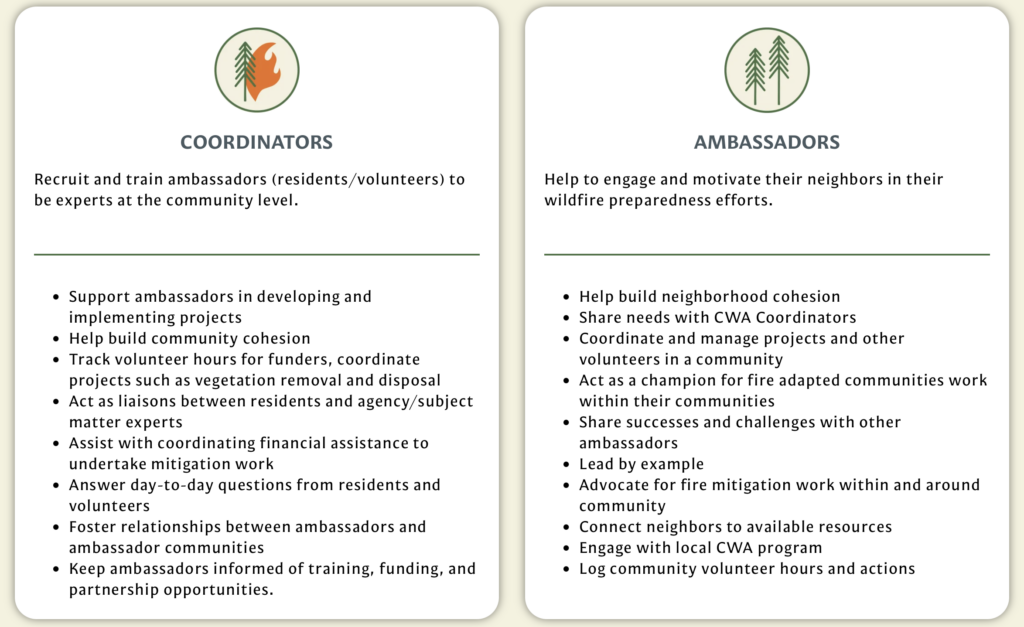
The CWA approach aims to build agency among neighborhood volunteers to strengthen locally-led wildfire resilience by providing them with training, tools, and support. The CWA approach is a proven methodology that fosters local leadership, collaboration, and knowledge sharing to help communities become better prepared for future wildfire events.
At this time, five CWA programs have been established across the state in San Juan, Okanogan, Klickitat, Chelan, and Whatcom/Skagit Counties. We talked to three Coordinators, each at their own stage of program development.
OKANOGAN COUNTY
Fire Adapted Methow’s (FAM) Neighborhood Ambassador Program started as one of the first pilots in 2024 and is the state’s most well established at this time. The Methow Valley is intimately familiar with wildfire. Over time, 50% of the watershed has burned. The need for wildfire mitigation and resilience is high in a fire-prone landscape like this, and FAM’s extensive volunteer network was the perfect place to start recruiting Ambassadors.
Sheah Ellis, who is stepping down as Director of FAM this year, filled us in on how things are going. Upon her departure, the Neighborhood Ambassador Program will be taken over by a newly hired Program Coordinator, who will build upon what Sheah has built so far.
Q: How have you seen the program have an impact so far?
A: The first year was a lot of training and education. The biggest thing was just getting people to interact with their neighbors. Some places had Firewise USA® programs already, while others had zero experience with wildfire mitigation, so there was a lot of learning that needed to happen at the start. This summer, though, there will be more work on the ground. For example, one neighborhood has started hosting bimonthly meetings, purchased a dumpster, and just had a chipping event.
Q: What has the response of the community been?
A: People seem to be excited to participate and have a already started taking action themselves. One of the Ambassadors lives on national forest land so his “neighborhood” is made up of huge 30 acre lots. Not many neighbors know each other, so he dedicated the time to write letters to each of the landowners and has already received responses. Another Firewise USA® neighborhood has been hosting community events and is making a point to reach out to part-time residents and second-home owners.
Q: What have you learned so far?
A: It’s important to establish expectations both for those participating and yourself. Don’t anticipate that everyone will follow through but also make it clear what is required for involvement. It’s also important to establish norms from the beginning, even for things as simple as meeting times.
Q: Where would you like to see the program go as it grows?
A: Increase work on the ground. It’s pretty fragmented at this time and is often determined by who has the money to accomplish it. In the past, FAM has worked to increase equitable mitigation, so that will likely become a focus to make sure all neighborhoods are able to mitigate against fire risk, not just those with the resources to do so.
WHATCOM & SKAGIT COUNTIES
Whatcom and Skagit Counties
On the other side of the Cascades, Washington’s two northwestern-most counties are just beginning their CWA program. Residents’ experience with and knowledge about fire differs greatly depending on if they live in the more coastal, urban, mountainous, or agricultural parts of the region. Although wildfire can at times feel far away for Western Washington residents, it has begun to feel closer and more personal each year. Highway 20 closures have impacted tourism and the 2025 LA fires made locals living in a quickly developing area keenly aware of the dangers of an urban conflagration. Whatcom and Skagit Conservation Districts are working hard to reach those who want to take action in their communities.
Robert Walters, the Community Wildfire Resilience Specialist from Whatcom Conservation District, spoke with us about what it takes to launch a program like this.
Q: Why did you decide to adopt the CWA approach?
A: Community mitigation isn’t new in Skagit and Whatcom counties, there are many Firewise USA® communities. However, burnout – and leaders aging out – has been an issue. Communities weren’t getting guidance on continuity and succession, and while some are able to figure it out on their own, others need more support. While there is not necessarily imminent fire danger as there is in other counties, creating a network of residents, landowners, and homeowners will ensure the structures and strategies are in place for when something does happen.
Q: What are your goals for the program?
A: Ideally, with some technical assistance and access to the necessary resources, these networks become [the residents’] thing. They can steer it in any direction they like, whether that’s fuels reduction and vegetation management in shared spaces or home safety and hardening.
Q: What advice do you have for others interested in starting a similar program?
A: Temper your expectations. The initial response was not what was hoped for. We trusted the process, sent several reminders, and actually wound up with a decent number of attendees at the first meeting. More importantly, those that did attend had great conversations and input. By the end of the meeting, the group was very excited about moving forward. I received several emails early the next day thanking us for putting this together and offering more ideas for future meetings.
KLICKITAT COUNTY
Like Whatcom and Skagit Counties, Klickitat County is just beginning to form its CWA program. With the Columbia River as its southern border, Klickitat County has seen several fires in the past few years, spurring increased interest in community mitigation and preparedness as residents are coming to terms with the fact that fire is a regular part of the landscape and ecosystem. Last summer, the Burdoin Fire forced evacuations and road closures and destroyed several homes. Rising insurance rates and non-renewals are also driving higher levels of engagement.
Charlie Landsman, the DNR Community Wildfire Resilience Coordinator for southern Washington counties, has had residents coming to him asking for contacts in adjacent communities to expand their preparedness efforts. The CWA method serves as the perfect fit to connect between and across communities, fostering an “all hands, all lands” approach.
Q: Why did you decide to adopt the CWA approach?
A: It’s unique in that it builds ownership from Ambassadors. It’s not an agency or fire district driven solution but a resident one, we just help coordinate those relationships between communities. Folks are empowered to solve this problem themselves and work with others to create accountability in place. It’s impactful to have the messaging come from neighbors who can use their social capital to bring more people in.
Q: What are your goals for the program?
A: Engagement and local ownership. Ambassadors know what the priorities are in their community. While my priorities are mainly structure hardening and fuels reduction, theirs might be evacuation and smoke preparedness. Each plays a role in creating more fire-adapted communities, which is the ultimate goal. A Coordinator is there to support Ambassadors in their goals first and foremost.
Q: What barriers have you faced so far?
A: Stuff like this is often de-prioritized because it’s not tied directly to any risk reduction metric. When times get busy, community mitigation is an easy thing to drop from the to-do list. That’s why it is so critical to have a local Coordinator that has time and money allocated to keep it going and Ambassadors to keep their communities on track when there is turnover in the Coordinator position.
Q: What advice do you have for others interested in starting a similar program?
A: It might take a while for an idea like this to catch on. Plant the seeds ahead of time and let people come to it themselves. Rather than pushing rapid growth, let ambassadors drive and engage folks to the point where there is sustained growth.
Interested in bringing CWA to your community? Contact [email protected] or your local DNR Community Wildfire Resilience Coordinator.
More Resources: