
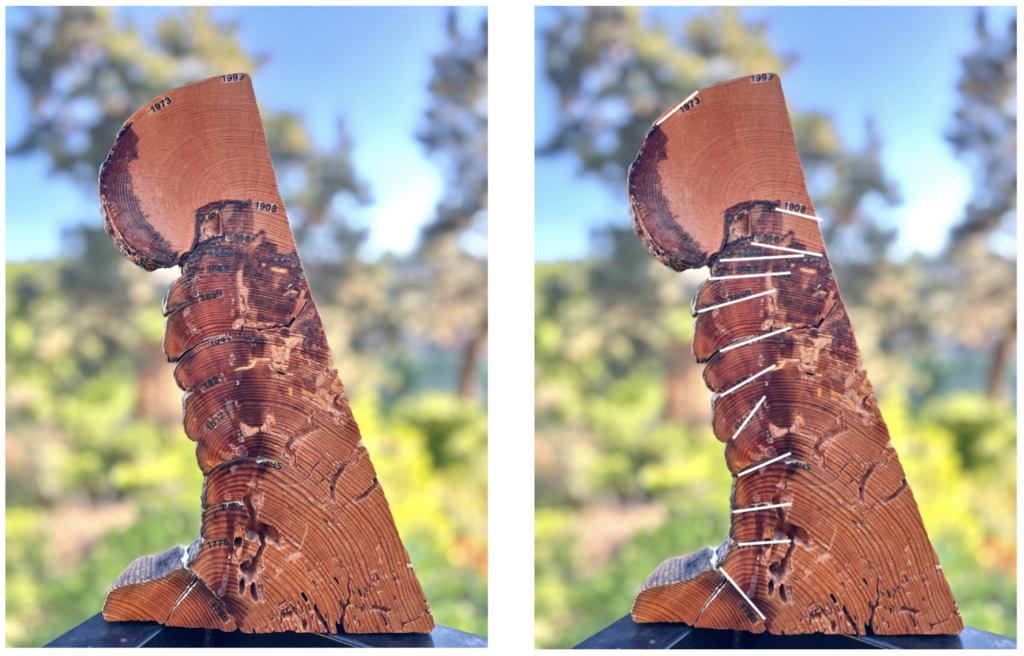
Trees tell stories; they record history. A tree ring analysis can chart the course of fire across a landscape. The “tree cookie” below tells just one part of the story about the prevalence of fire in Washington over a couple hundred years.
We see natural fire intervals carry-on with relative consistency until approximately 100 years ago, there’s a disruption. One last fire, right before the Big Burn of 1910, then no evidence of fire captured in the growth rings for nearly a century. The introduction of fire exclusion policy, combined with a cooler climatic period, created a massive gap. Until recently, when we entered the era of mega fires.
For millenia, Indigenous societies and communities lived alongside fire. Fire was a cultural practice, a management technique, a part of life. But today, we’re experiencing the consequences of Euro-American attempts to exclude natural processes like fire, rather than live alongside them.
Although we’ve better aligned with fire in the past couple of decades thanks to efforts to put it back on the land, our disruption of natural fire regimes, combined with a warming climate, is resulting in more and more destructive events. Not the type of beneficial fire that can support life, rather, the kind that can take life, degrading ecosystems and the values that flow from them. In this timeline of fire, we’re only just beginning to learn what it means to live in a fire environment, to be resilient and recover from large fire events, and how our modern-day systems and governments are (un)equipped to do so.
As far as our ability to reconnect with fire and promote its beneficial use has come, our recovery efforts have seemingly fallen behind. Post-fire recovery is piece-meal, a combination of occasional federal assistance with state and private assistance to supplement communities that are required to step-up each time.
Trial By Fire
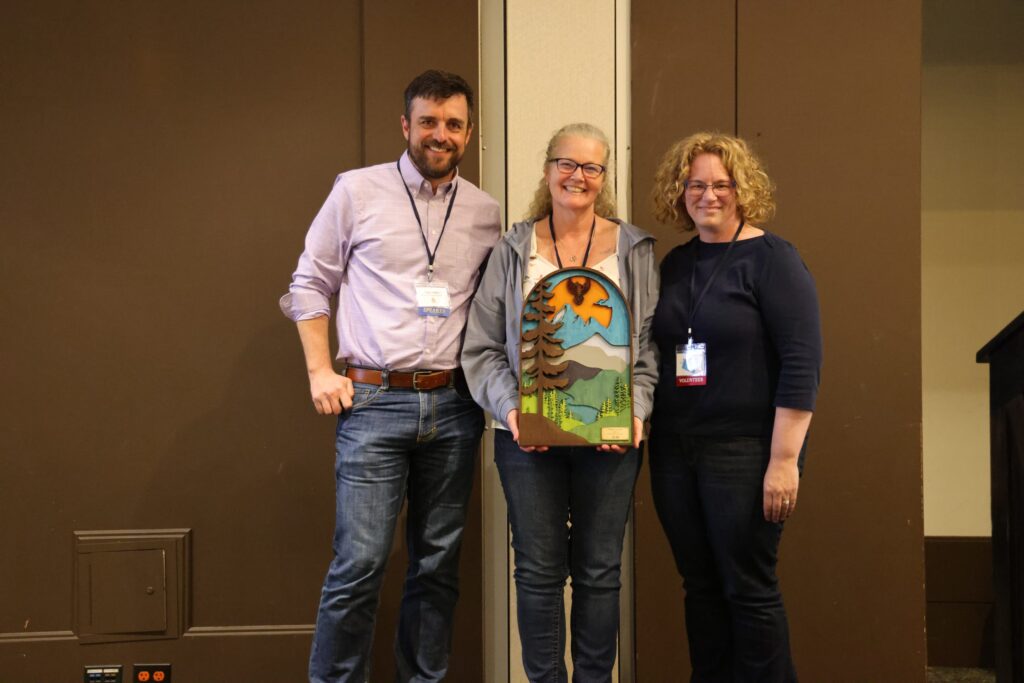
With no collective knowledge of post-fire recovery and vague expectations of responsibilities, expertise is earned through the trauma of experience. At the 2026 After the Flames Conference and Workshop, a nearly weeklong national recovery conference held in Cle Elum, Washington, Jessica Farmer and Carlene Anders of the Okanogan County Long Term Recovery Group (OCLTRG) were given the Phoenix Award, an acknowledgement of their decades of impactful dedication to community wildfire recovery.
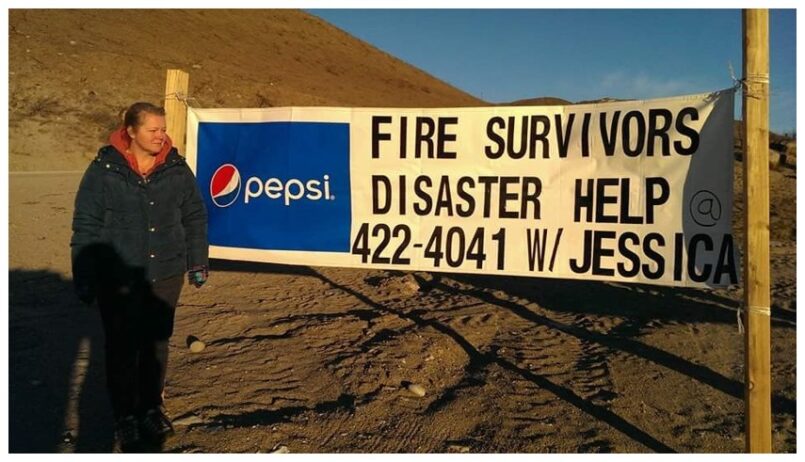
In 2014, and again in 2015, multiple mega fires burned through Okanogan County, thrusting community leaders into chaos with little to no understanding of how to move through what would turn out to be a decade of recovery. Not knowing what else to do, Jessica put her phone number on a sign by the side of the road, offering disaster assistance.
In 2014, we responded to a wildfire disaster destroying over 250K acres and almost 200 homes. Recovery, as best we could help with, took 6 years. In 2015, we responded to a wildfire disaster destroying over 350K acres and over 300 homes. Recovery, as best we could help with, took 5 years. In 2020, we responded to a wildfire disaster destroying over 500K acres and almost 500 homes. Recovery, as best we could help with, took 4 years.
Jessica Farmer
Today, both she and Carlene are national recovery experts, traveling across the country to help other communities navigate what they’ve experienced too many times. Jessica and Carlene learned the hard way how long it actually takes to recover from wildfire – they know the meaning of adaptation. They are on the front lines, learning by doing, as are the rest of us working to figure out how exactly to tackle this undertaking of fire recovery – before, during and for years after.
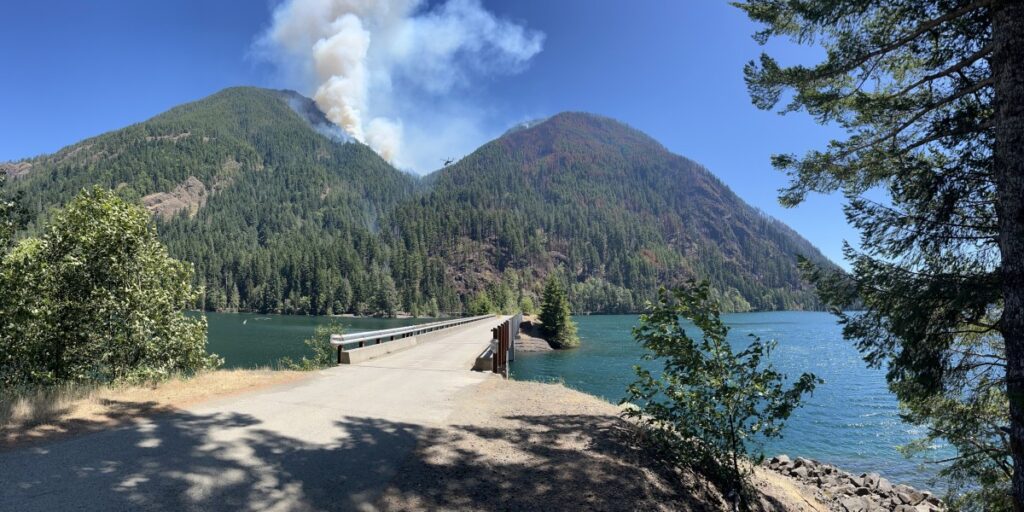
In 2026, stressors continue to mount. Critically, federal agency reorganization and upheaval mean we are relying more and more on state and local county level agencies whose capacity is already stretched thin. After a historically dry and warm winter with a dismal snow pack, amidst a declared drought and looming high summer temperatures, Washington is preparing for another fire season. Dave Upthegrove, WA Commissioner of Public Lands, told After the Flames attendees, “No part of our state is immune to these challenges…the next fire is always on its way”. Just last year, in 2025, The Bear Gulch Fire burned over 20,000 acres of wet, western WA forest on the Olympic Peninsula. It was the largest fire in a generation, forcing the western part of the state to come to terms with the fact that yes, wildfire has always and will continue to burn the “wetside”.
Which brings us to what everyone in wildfire recovery is talking about right now, planning. We’re all starting to recognize a seemingly obvious truth: pre-planning for recovery makes the actual process of recovery exceptionally more efficient and effective. The mechanisms exist: Community Wildfire Protection Plans, Hazard Mitigation Plans, Emergency Response Plans, and Recovery Readiness Guides, to name a few. While these frameworks and tools are available, we need more communities to prioritize their local development.
But planning takes coordination and collaboration, which depends on the establishment of trust and relationships between diverse agencies, organizations, and stakeholders. “Relationship” seemed to be the word on everyone’s lips at After the Flames. Melissa Napoli, who spoke on a panel representing Wasco County in Oregon, said, “Humanity is never more powerful than when we’re in partnership…Wildfire is a human problem so we need to approach it as human beings.”
She was partially referencing the Artemis II space expedition – the astronauts had just successfully navigated around the far side of the moon the day before – an unexpected throughline of the conference used to exemplify the massive achievements accomplished when people work together. If we can send people to the moon, then surely we can create equitable, effective systems of recovery. The question is, how? As was mentioned many times, no one will be able to rely on the federal government to save us, especially at this specific moment in time when so much is uncertain. Rather, neighborhoods, cities, counties, and states are going to have to figure out what works best for their place and their people, together.
The Evergreen State
In Washington, “collective recovery” is starting to unfold in several ways. In 2023, the Department of Natural Resources established the Post-Fire Recovery Program. For three consecutive years, it has hosted annual Post-Fire All Hands Gatherings to help establish the relationships necessary to coordinate recovery at a broader scale. Post-fire recovery, which more often than not occurs across ownerships and jurisdictions, is often too complicated for one agency or individual to tackle alone. Therefore, coordination is a critical step to maximize recovery capacity and build back more resilient. These problems require creative problem solving and robust partnerships.
Cascading impacts, like flooding and debris flow, last for years after a fire before stabilizing. Together, with local, state, and federal partners, DNR is working to bring multiple sources of technical assistance, funding, and capacity to solve complex problems. The Post-Fire Recovery Program partners with Washington Geological Society to leverage post-fire data collection and other critical hydrologic and terrestrial information to guide informed decisions for post-wildfire mitigation. Together, these programs make conscious and collaborative efforts to leverage holistic and sound practices that build resilient landscapes and communities. In 2025, leveraging another partnership, DNR funded the Washington Resource Conservation and Development Council (WRCD) to create a statewide recovery information hub, AfterTheFireWA.org, to begin amassing resources for wildfire survivors and recovery practitioners in one accessible place.
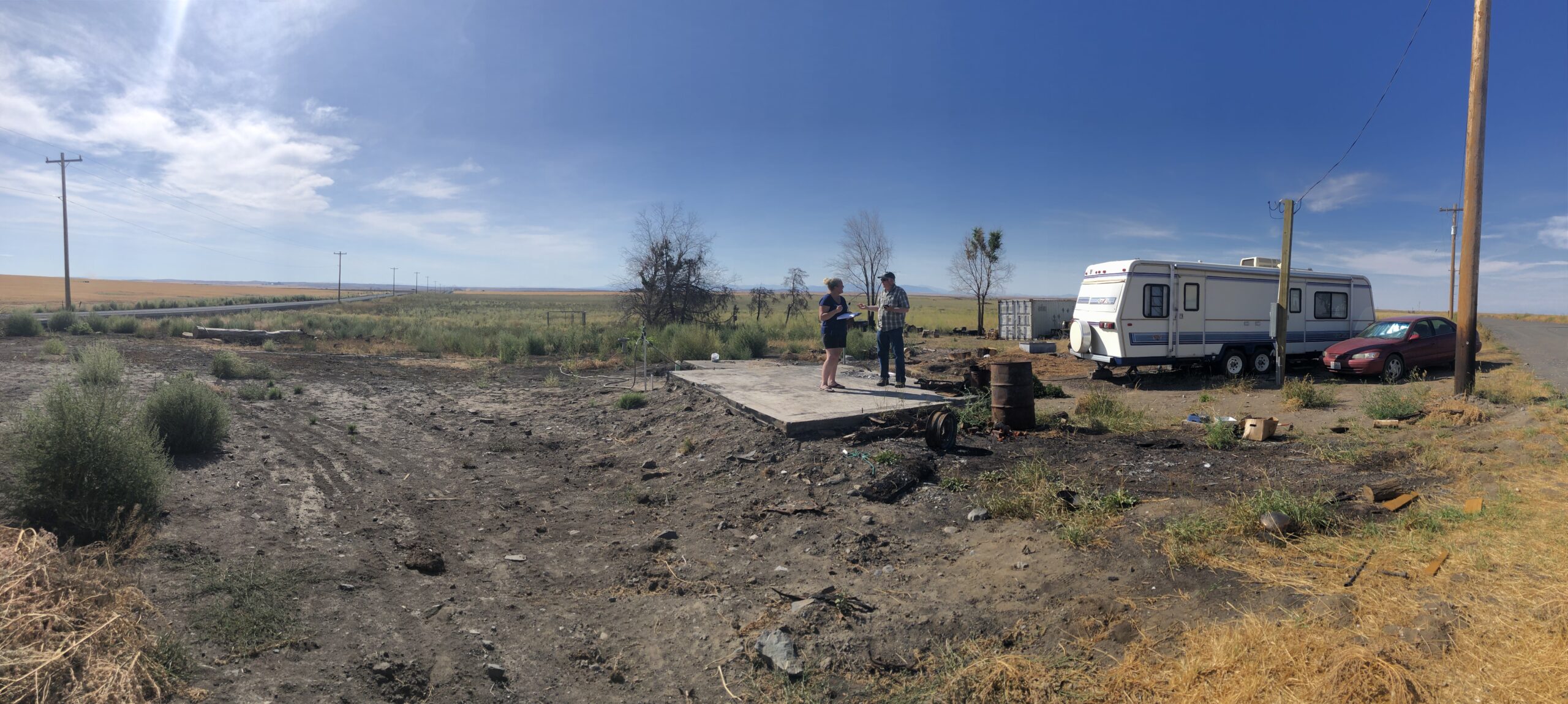
At a more localized level, Carlene and Jessica have lent their expertise to help stand-up Long Term Recovery Groups (LTRGs) in response to several fires in recent years. Long Term Recovery Groups are vital in ensuring survivors are connected with recovery resources and receive the support and assistance needed to recover in the long-term. Conservation Districts in fire-impacted counties have also stepped up to help landowners repair damage to their properties, with many creating their own dedicated wildfire recovery programs, filling gaps in aid when federal assistance is not available or supporting implementation when it is.

It Takes a Village
In late May 2026, over 130 people joined a virtual Post-Fire Situational Awareness meeting hosted by DNR’s Post-Fire Recovery Program. Various state agency representatives discussed ongoing impacts from the 2025 fire season before looking ahead to what is expected for 2026. Situational Awareness calls will be held throughout the summer to keep everyone apprised to post-fire situations as they unfold.
Although the outlook for the 2026 fire season is bleak, DNR’s meteorologist captured the general sentiment: even if the highly destructive 2015 fire season repeated itself, the outcomes will likely be very different. We’ve come a long way, evidenced by this very meeting.
Looking ahead, Washington is moving toward a time in which recovery is no longer just reactive, but rather a process for which state and local entities are prepared for in advance. Although the experience of a wildfire may be no less traumatic, if we can embed recovery into the fabric of our political, economic, and social systems, then maybe the long, arduous journey of recovering from such an event might be at least slightly less traumatic in itself, with our communities finding their footing just a bit quicker than the last time.